"Doesn’t AI just make generic books?" Yes. And no.

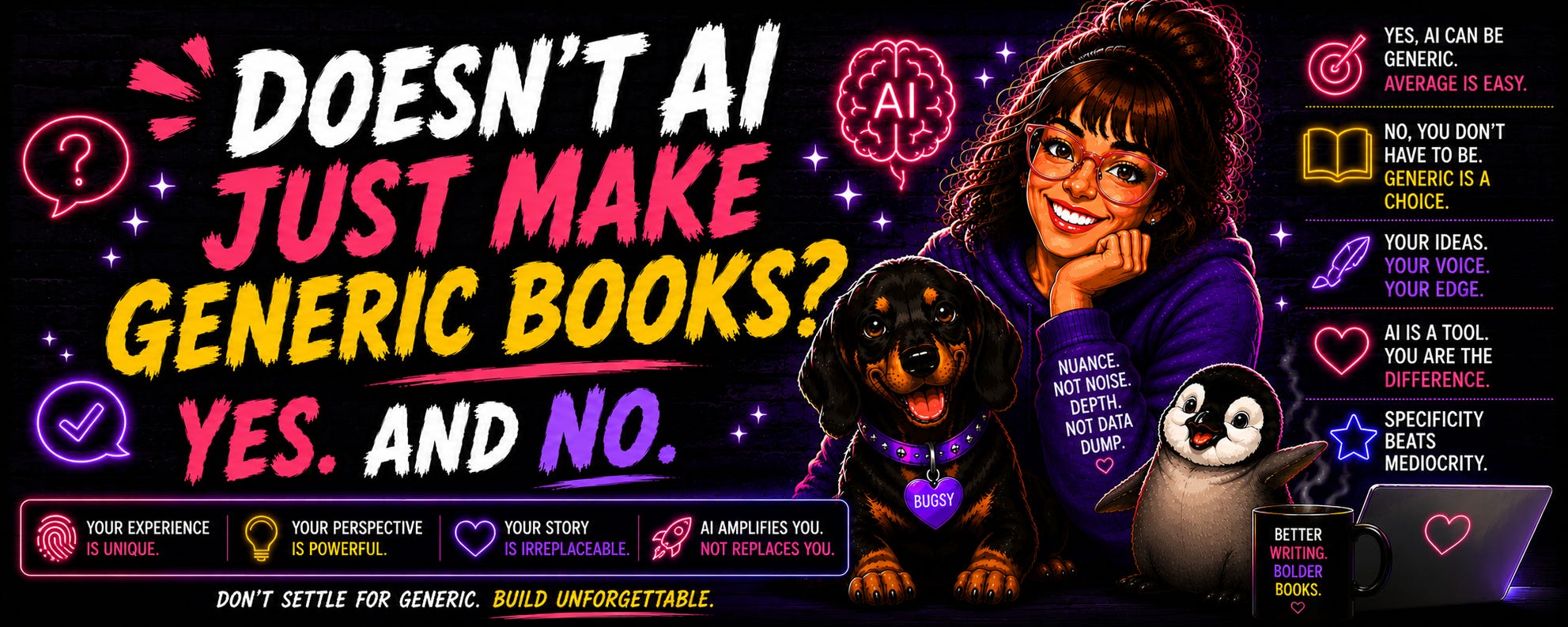
This is the question I get most, usually with a little heat behind it. My honest answer: yes, it absolutely does — when people use it lazily. And no, it doesn’t have to. Both halves are true, and most arguments about AI writing fall apart because people only want to say one of them.
The lazy path is real and it’s everywhere. One prompt, one click, upload, repeat. You can spot those books from the product page — interchangeable, thin, and readers are getting faster at sniffing them out. I’m not going to defend that. It’s throwaway work, and it makes the whole category harder for everyone doing it right.
But “the tool can be used badly” is not the same as “the tool is bad.” A camera in the wrong hands makes thousands of blurry, pointless photos. That didn’t make photography fake. The difference was never the camera — it was whether a person with taste and intent was behind it.
The books I’m proud of have my judgment in every layer: the concept, the structure, the voice, the hundred small decisions about what stays and what goes. AI made me faster at executing those decisions. It did not make the decisions. That’s the line, and it’s a bright one.
So when someone asks whether AI makes generic books, the real question underneath is: are you going to bring taste and intent, or are you going to click the button and walk away? The tool will happily do either. That part was always on you.
Where’s your line — what’s the difference between using a tool and letting it use you? Reply and tell me. I read every one.
— Dana 🐧
We argue about exactly this (productively) in the community — come weigh in: https://www.skool.com/ai-writing-easy-af